




How to Choose a Ski Before the Snow Starts Falling
|
|
Buying skis before the temperatures drop and the snow starts falling takes a little imagination. The lifts aren’t spinning, your legs haven’t quite remembered the burn of a powder day. The woods are still mostly green, or maybe just starting to turn, and last winter’s best ski days have begun to blur with the season’s prior.
Don’t sleep on preseason, though. In fact, it’s the best time to prep your setup.
Without a powder forecast distracting you or a particularly icy Saturday convincing you that you need a race ski immediately, you can make a more useful decision: What kind of skiing do you actually do? Choosing the right ski before winter starts is less about predicting the snow and more about looking backward. Your last season already gave you most of the information you need. (Unsure which ski is for you? Take our 60-second quiz.)

It’s easy to shop for an imaginary version of your ski season. Maybe that version of you wakes up for every storm, spends afternoons ducking into perfectly spaced trees and somehow catches untracked snow three days after the weather clears.
Your actual ski season likely looks a lot different. Think about ten representative days from last winter. Where were you? What was under your skis? Were you mostly carving groomers in Vermont? Hunting for soft snow in Colorado? Splitting time between resort laps and the backcountry? Skiing with your kids in the morning and sneaking off for faster laps in the afternoon?
Those details are far more useful than simply labeling yourself an “advanced skier.”
Geography matters, too. Someone skiing 50 days in New England is solving a different equipment problem than someone skiing 50 days in Utah. Even if both consider themselves all-mountain skiers, the snow they encounter most often changes what “all-mountain” should mean.
Your ski should be built around the middle of your season, not its most spectacular two days.

Sometimes the easiest way to choose your next ski is to stop thinking about skis entirely and think about moments.
Consider where you hesitated: did your skis get chattery at speed? Or, were they great on edge but turns quickly became exhausting in deeper snow? Or perhaps nothing was particularly wrong, you simply wanted the ski to feel quicker, calmer, lighter or more playful.
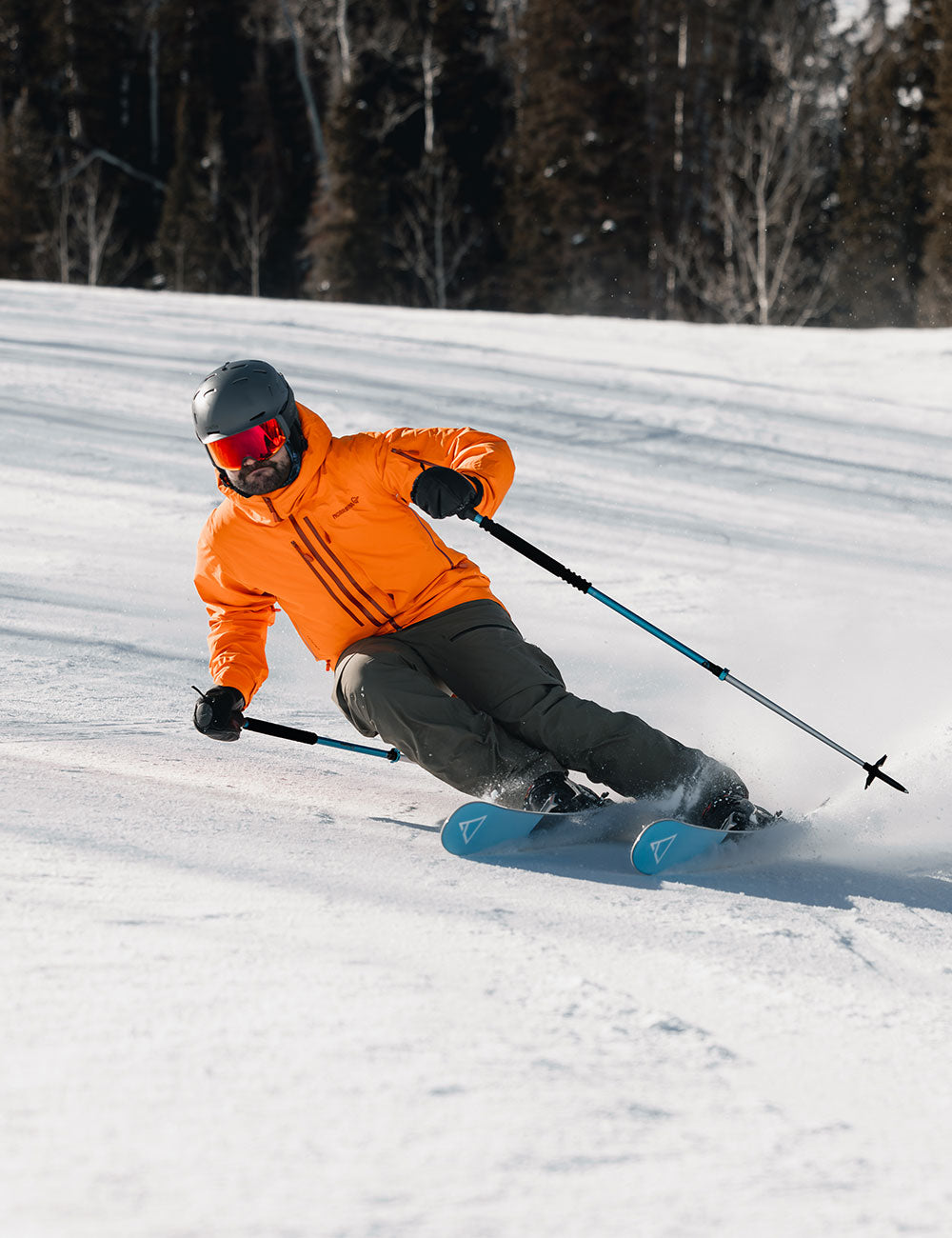
These are important observations to categorize. A skier who repeatedly wants more confidence on firm snow might gravitate toward something like the Renoun Endurance 88, a more planted all-mountain platform with two sheets of Titanal, a Maple core and VibeStop™ designed around stability and edge control.
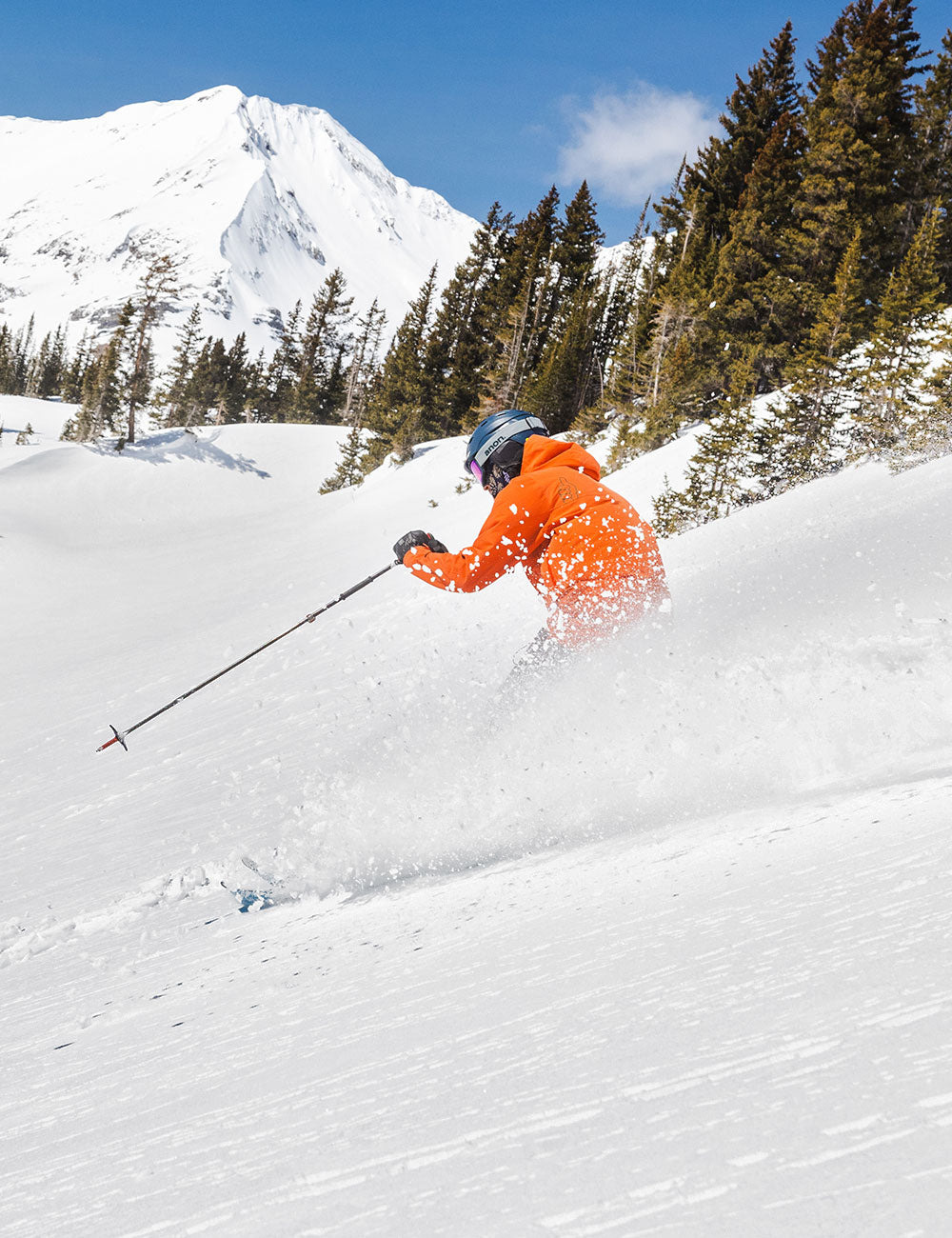
For those whose season regularly wanders into softer snow and off-piste terrain may find the Endurance 98 a better center point. It maintains an all-mountain focus but adds more width and a looser, more surf-oriented feel for skiers who spend more time searching beyond the groomed trail.
Every preseason eventually produces the same conversation about upcoming conditions and snowfall predictions. And while seasonal forecasts are both crossing your fingers for, they’re rarely something to base a large purchase entirely upon.
Even during an excellent snow year, most resort skiers spend far more time skiing settled, groomed, bumped-up, wind-affected and generally complicated snow than they do floating through untouched powder. Choose for the conditions you know you’ll encounter, and consider the forecast a bonus.
This is particularly important when debating ski width. A wider ski can certainly make soft snow more enjoyable, but buying a powder-oriented ski because this might finally be the year can leave you with a lot of ski underneath you on considerably more ordinary days.
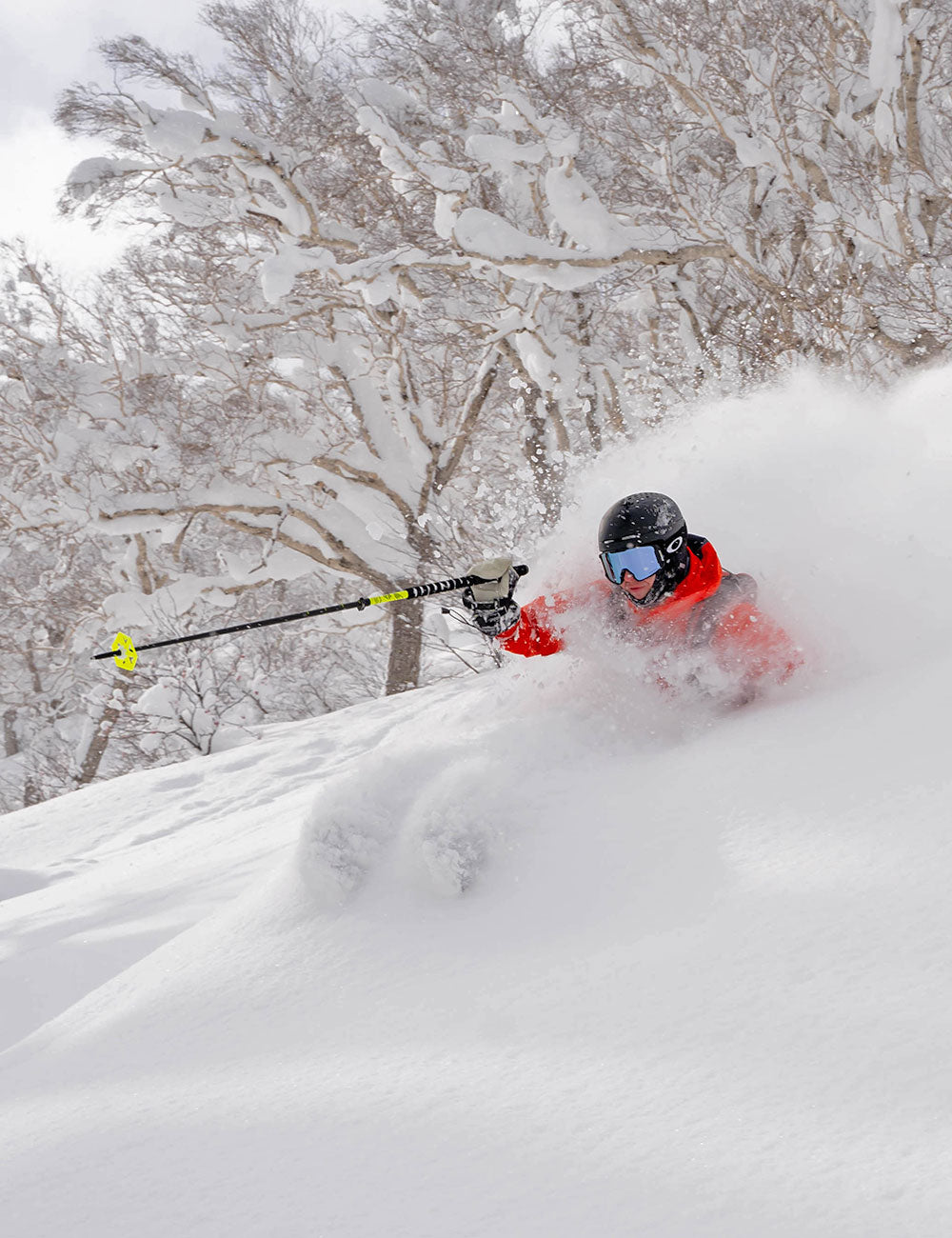
On the other hand, if deep snow isn't the exception in your winter, or if powder and touring are specifically what you structure your skiing around, a ski like the Citadel 107 makes sense because its priorities shift toward float, agility and lower weight. Renoun pairs its 107mm waist with carbon-fiber construction and VibeStop™, positioning it for both deeper resort days and touring.
The question isn't, “Could I ski this on a powder day?” Most modern skis can handle quite a lot. A better question is, “How often will I get to use what this ski does best?”
Ski specifications are useful, but skis aren’t spreadsheets. Two people can look at the same dimensions, radius and construction and want completely different things from them.
Some skiers like a ski that feels firmly connected to the snow. They want to set an edge and trust that it will stay there. Others would happily sacrifice some of that locked-in sensation for something easier to pivot, slash or redirect. Deciding what you want to feel on snow can be more useful than starting with waist width.
Consider if there is a theme to your needs. For example, if the recurring thought is, “I want to trust my skis more when conditions aren't perfect,” you probably want to prioritize stability and damping. If it's something like, “I want to go looking for more interesting terrain,” then versatility and maneuverability start to carry more weight.
The best ski choice usually becomes clearer once you stop asking which ski is “best.”
There is no ski that skis exactly like an 80mm carving ski on hardpack and then magically becomes a 110mm powder ski when it starts snowing. A modern all-mountain ski, however, can cover an impressively large middle ground. For many skiers, that middle ground is exactly where they should shop.
If your season contains a little bit of everything but leans toward groomers, firmer snow and mixed resort conditions, something around the Endurance 88 end of the spectrum makes sense. It’s an everyday, all-mountain option, with an emphasis on control across groomers, crud and variable snow. Move toward an Endurance 98 if your definition of “all mountain” increasingly includes soft snow, trees, sidecountry and searching for whatever the storm left behind.
Neither choice is more advanced, they simply solve different versions of the same problem. And if you already own multiple skis, the calculation changes again. Your next pair doesn't need to cover every possible condition. It can fill the gap your current setup leaves open.
Of course, there is one option that allows you to swap out your skis mid-season. Let's say you plan to start the season in the Northeast riding the Atlas 80, but want to spend some time out west mid to late season; you'll likely need a different ski to accommodate the change in terrain. As a RenounPro member, you can swap out your skis for a different pair at any time for any reason, for just $150. So in this example, you own and ride the Atlas 80 for a few months, then upgrade to the Citadel 107 later, for a minimal cost. Just return the unwanted ski to us, and we'll ship you the new one.

There’s another variable that gets overlooked during ski shopping: you. Your skiing changes from season to season, and sometimes that means what was once the perfect ski no longer serves your upcoming seasonal needs.
Age doesn't automatically mean moving to something easier, and improvement doesn't automatically mean moving to something stiffer. It simply means your priorities can change, and equipment should follow suit.
The temptation when buying skis preseason is to wait for some kind of certainty. But if you've been skiing for a while, you already have a season's worth of evidence.
You know where you spend your time, which days make you grin in the lift line and which conditions have you heading home early. There’s a very good chance you know not only whether you seek out groomers, trees, bumps, bowls, sidecountry, but the specific trails you’ll be on.
It’s a great starting point from which to choose a ski that makes those days better. Then let winter can take care of the rest.
Renoun Skis Reviews team has over a decade of ski design and manufacturing experience, and decades of combined ski-industry experience ranging from certified PSIA ski instructors to shop technicians, racers, and coaches. We also have a deep passion for and love of all things skiing. The team utilizes this experience to provide unparalleled reviews that dive deep to help guide your purchase for just about any ski-related item and help inform you of any ski-focused tips and tricks about maintenance, on-hill performance, and even the best places to enjoy your Après-Ski. Through written and video content, the Renoun Skis Reviews team is here to help inform you on all things ski-related.
Our team curates recommendations based on an intensive research and review process and leverages our unique expertise in the industry. A product must be exceptional in quality and have unique features to qualify for consideration in our review process. For all tips and tricks, all advice is based on on-hill and ski manufacturing knowledge, as well as intensive research to ensure accuracy and help skiers like you stay informed.
To share feedback or ask a question about this article, send a note to our Reviews Team at info@renoun.com.

The Author: Lucy Higgins
Lucy is a seasoned editor and writer with a background in magazine publishing. Formerly the Editor-in-Chief at Backcountry Magazine, she now works as a freelance writer and editor.
When Lucy's not at a desk, she can be found running, skiing, and spending time with her kids.

Free Shipping & Returns
Fast, free shipping and easy returns in the US & Canada.

TryOnSnow™
Ski up to 5 days within 6 months. Not in love? Return for a full refund.

Made in North America
Designed in Vermont, handmade in Québec from premium materials.

Built with VibeStop™
VibeStop™ reduces vibration for smoother, more controlled skiing.